
Introduction
Graphic Design Trends 2026 are shaping the future of branding, digital marketing, and visual communication. As businesses compete for attention in increasingly crowded markets, staying updated with the latest design innovations has become essential for building memorable brands and engaging modern audiences.
From AI-powered creativity and immersive experiences to sustainable visuals and experimental typography, the design landscape in 2026 is evolving rapidly. Whether you are a designer, marketer, entrepreneur, or business owner, understanding these emerging trends can help you create stronger connections with customers and maintain a competitive advantage in the USA, Canada, Europe, and the UK.
Table of Contents
- Why Graphic Design Trends 2026 Matter
- Graphic Design Trends 2026 Shaping the Industry
- Benefits of Following Emerging Design Trends
- Best Practices for Implementing Modern Design
- Common Mistakes to Avoid
- Practical Checklist
- Call-to-Action
- Frequently Asked Questions
- Conclusion
Why Graphic Design Trends 2026 Matter for Businesses
Visual communication is becoming increasingly competitive. Consumers are exposed to thousands of advertisements, websites, and social media posts every day.
Brands need more than attractive graphics to stand out.
They need visuals that:
- Build credibility
- Improve engagement
- Support brand recognition
- Enhance user experiences
- Communicate values clearly
- Increase conversions
Businesses that ignore changing design preferences often appear outdated, while those embracing innovation tend to attract younger audiences and maintain stronger customer relationships.
For example, many global brands are already moving toward cleaner interfaces, AI-supported workflows, and sustainability-focused visual identities.
Top Graphic Design Trends 2026 Transforming Visual Communication
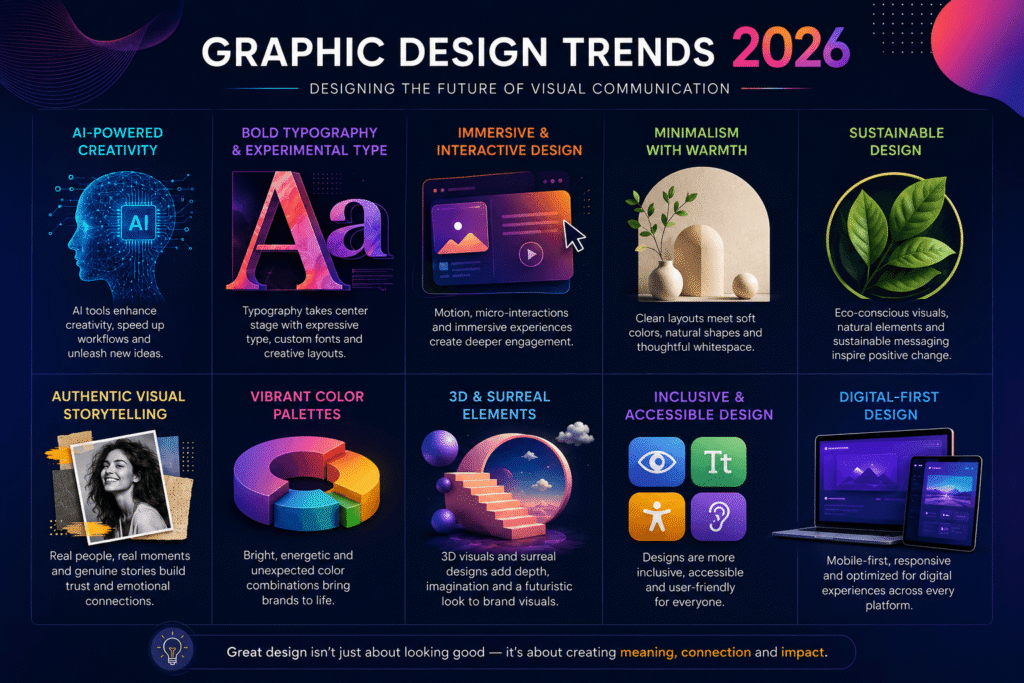
AI-Powered Creativity in Graphic Design Trends 2026
Artificial intelligence is no longer replacing creativity. Instead, it is becoming a powerful creative partner.
Designers are using AI tools to:
- Generate concepts faster
- Explore multiple design directions
- Create personalized visuals
- Automate repetitive tasks
- Improve productivity
However, human expertise remains critical.
Successful brands combine AI efficiency with emotional storytelling, strategic thinking, and artistic judgment.
In 2026, designers who understand how to collaborate with AI will likely gain a significant competitive advantage.
Immersive and Interactive Experiences
Static visuals are gradually giving way to more engaging experiences.
Consumers increasingly expect interactive content that captures attention immediately.
Examples include:
- Micro animations
- Dynamic website elements
- Interactive infographics
- Scroll-triggered storytelling
- Motion-based branding
Interactive design creates stronger engagement and helps businesses retain visitors for longer periods.
This trend is particularly valuable for technology companies, eCommerce brands, and service-based businesses seeking higher conversion rates.
Human-Centered Minimalism
Minimalism continues to evolve.
Rather than sterile or overly simplistic layouts, 2026 introduces a more emotional approach to clean design.
Characteristics include:
- Soft color palettes
- Rounded shapes
- Organic forms
- Friendly typography
- Increased whitespace
- Purpose-driven layouts
This style makes brands appear more approachable while improving usability.
Human-centered minimalism is especially effective for healthcare, finance, education, and professional service industries.
Experimental Typography
Typography is becoming a dominant design feature rather than merely supporting content.
Expect to see:
- Oversized fonts
- Variable typography
- Animated text
- Layered lettering
- High-contrast type combinations
- Custom typefaces
Typography can instantly communicate personality, making it an essential component of modern brand identity systems.
Sustainable Graphic Design
Sustainability is influencing visual branding decisions across industries.
Consumers increasingly support organizations demonstrating environmental responsibility.
Sustainable design trends include:
- Minimal ink usage
- Eco-conscious packaging
- Reduced visual clutter
- Natural textures
- Earth-inspired palettes
- Digital-first communication
Many brands now use design to reinforce their sustainability commitments and appeal to environmentally conscious audiences.
Inclusive and Accessible Design
Accessibility has shifted from an optional consideration to a business necessity.
Inclusive design ensures content remains usable for people with varying abilities.
Accessibility improvements include:
- High color contrast
- Readable typography
- Alternative image descriptions
- Logical navigation
- Mobile-friendly interfaces
- Simplified layouts
Organizations prioritizing accessibility often benefit from stronger user experiences and broader audience reach.
Authentic Visual Storytelling
Audiences increasingly value authenticity over perfection.
Polished corporate imagery is being replaced by visuals that feel relatable and genuine.
Brands are embracing:
- Real photography
- Behind-the-scenes content
- User-generated visuals
- Hand-drawn elements
- Editorial-inspired layouts
- Personal narratives
Authenticity helps businesses establish trust and create meaningful relationships with customers.
Benefits of Following Graphic Design Trends 2026
Keeping pace with design innovation offers numerous advantages.
Improved Brand Perception
Modern visuals signal professionalism and innovation.
Customers often judge businesses within seconds of interacting with a website or advertisement.
Contemporary design increases confidence in a brand.
Better User Engagement
Compelling visuals encourage users to:
- Spend more time on websites
- Explore additional pages
- Interact with content
- Share information socially
This increased engagement can positively impact SEO performance.
Higher Conversion Rates
Effective design simplifies decision-making.
Clear calls-to-action, intuitive layouts, and attractive visuals guide users toward desired actions.
Examples include:
- Booking consultations
- Requesting quotes
- Making purchases
- Downloading resources
Stronger Competitive Positioning
Businesses adopting emerging trends often appear more forward-thinking.
This can be particularly important in highly competitive sectors where visual differentiation influences customer decisions.
Best Practices for Implementing Modern Graphic Design
Following trends blindly can weaken a brand identity.
Instead, businesses should adopt a strategic approach.
Step 1: Understand Your Audience
Analyze customer preferences, demographics, and behavior patterns.
Questions to consider include:
- What visuals resonate with your audience?
- Which platforms do they use most?
- What emotions should your brand communicate?
Step 2: Align Trends with Brand Identity
Not every trend fits every company.
A law firm may benefit from sophisticated minimalism, while a gaming brand may thrive with immersive and vibrant visuals.
Consistency remains essential.
Step 3: Prioritize Accessibility
Accessible design improves experiences for all users.
Consider:
- Font size
- Contrast ratios
- Responsive layouts
- Navigation clarity
Step 4: Experiment Gradually
Introducing every trend simultaneously can confuse audiences.
Test new design approaches incrementally.
Monitor:
- User engagement
- Bounce rates
- Conversion metrics
- Customer feedback
Step 5: Invest in Quality Assets
High-quality visuals influence brand credibility.
This includes:
- Professional photography
- Custom illustrations
- Consistent icon systems
- Brand-specific typography
Common Mistakes to Avoid
Many organizations adopt trends without considering long-term implications.
Here are several common mistakes.
Chasing Every Trend
Design trends evolve rapidly.
Following all of them can dilute brand consistency.
Choose trends aligned with your goals.
Ignoring Functionality
A visually stunning website that performs poorly frustrates users.
Balance aesthetics with usability.
Good design should always support user objectives.
Overusing AI
AI tools can improve efficiency, but relying entirely on automated outputs may reduce originality.
Creative direction still requires human insight.
Neglecting Accessibility
Ignoring accessibility limits audience reach and may affect compliance requirements in certain regions.
Accessibility should remain a priority from the beginning.
Forgetting Brand Personality
Trends come and go.
Your brand identity should remain recognizable regardless of changing visual styles.
Practical Checklist for Graphic Design Trends 2026
Use this checklist when evaluating your design strategy.
✔ Review current brand visuals
✔ Assess audience expectations
✔ Incorporate accessibility standards
✔ Explore AI-assisted design tools
✔ Update typography systems
✔ Improve mobile experiences
✔ Experiment with motion graphics
✔ Maintain brand consistency
✔ Test designs with users
✔ Monitor performance metrics
✔ Optimize visuals for SEO
✔ Refresh assets regularly
Ready to Elevate Your Brand Design?
Design trends are more than aesthetic choices.
They influence perception, engagement, and business growth.
Whether you are launching a startup, refreshing an established brand, or improving your digital presence, investing in modern graphic design can create measurable results.
Take the Next Step
Looking to strengthen your brand identity or modernize your visual strategy?
Contact our team today to discuss your goals, request a customized quote, or schedule a consultation to discover how future-focused design can help your business stand out in 2026 and beyond.
Frequently Asked Questions
What are the biggest Graphic Design Trends 2026?
The biggest trends include AI-assisted creativity, immersive experiences, sustainable design, accessible interfaces, authentic storytelling, and experimental typography.
Why are Graphic Design Trends 2026 important for businesses?
These trends help businesses improve engagement, strengthen brand recognition, enhance user experiences, and remain competitive in rapidly evolving markets.
Is AI replacing graphic designers in 2026?
No. AI is primarily enhancing efficiency and supporting creative workflows. Human designers continue to provide strategy, originality, and emotional storytelling.
How often should companies update their visual branding?
Most businesses benefit from reviewing their visual identity every two to three years while making smaller updates as consumer preferences evolve.
Which industries benefit most from modern graphic design?
Technology companies, eCommerce brands, healthcare providers, financial services, education organizations, and professional service firms all benefit from contemporary design approaches.
Conclusion
Graphic Design Trends 2026 highlight a future where creativity, technology, accessibility, and authenticity work together to shape stronger brand experiences.
Businesses across the USA, Canada, Europe, and the UK are increasingly investing in design that feels personal, engaging, and strategically aligned with customer expectations.
By embracing emerging trends thoughtfully rather than following them blindly, organizations can create visuals that not only look modern but also drive meaningful business outcomes.
Staying informed about Graphic Design Trends 2026 will help brands remain relevant, memorable, and prepared for the next wave of digital innovation.