
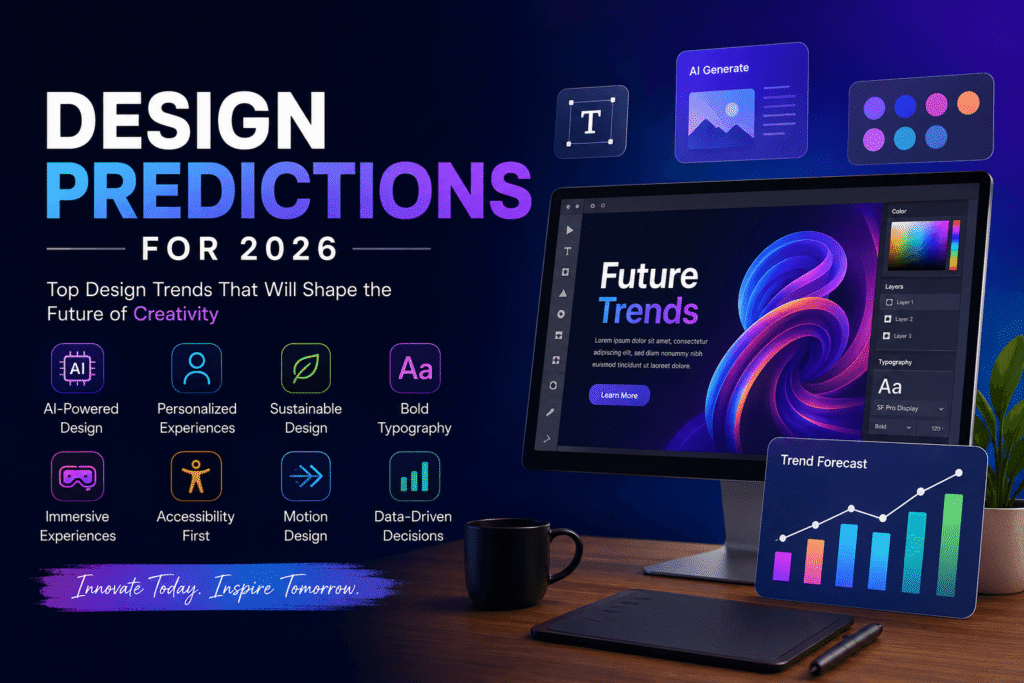
Introduction
Design Predictions are becoming more important than ever as technology, customer expectations, and digital experiences evolve rapidly. Designers, marketers, entrepreneurs, and business owners all face the same challenge: staying relevant in an increasingly competitive marketplace.
Whether you’re building a brand, designing a website, creating marketing campaigns, or launching a new product, understanding future design trends helps you make smarter creative decisions. Businesses that embrace innovation early often build stronger customer relationships, improve engagement, and stand out from competitors.
In 2026, artificial intelligence, personalization, accessibility, immersive experiences, and sustainable design are expected to influence nearly every creative industry. However, successful design won’t be about following every trend—it will be about choosing the right ones for your audience and goals.
This guide explores the most important design predictions, explains why they matter, and shows how businesses and designers can prepare for the future with confidence.
Table of Contents
- Why Design Predictions Matter
- The Biggest Design Predictions for 2026
- AI Will Become Every Designer’s Assistant
- Human Creativity Will Become More Valuable
- Personalized Design Experiences
- Minimalism Will Continue to Evolve
- Sustainable Design Will Influence Branding
- Benefits of Following Design Predictions
- Best Practices
- Common Mistakes
- Practical Checklist
- FAQs
- Conclusion
Why Design Predictions Matter
The design industry changes faster than almost any other creative field. New technologies, evolving customer behaviors, and shifting digital platforms constantly redefine what audiences expect.
Following Design Predictions allows businesses to:
- Stay ahead of competitors
- Create more engaging customer experiences
- Build stronger brands
- Improve website performance
- Increase conversion rates
- Prepare for future technologies
- Reduce costly redesigns
Rather than chasing every new trend, successful organizations focus on understanding which innovations create genuine value for their audience.
For example, a retail brand targeting Gen Z customers may invest in interactive product experiences, while a financial institution may prioritize accessibility and trust through clean, user-friendly interfaces.
Design predictions aren’t about guessing the future—they’re about preparing for it.
Top Design Predictions for 2026
The following trends are expected to shape creative industries throughout 2026 and beyond.
1. AI Will Become Every Designer’s Creative Partner
Artificial intelligence has already transformed the creative process, but its role will expand significantly in 2026.
Instead of replacing designers, AI will automate repetitive tasks, accelerate ideation, and enhance productivity.
Designers will increasingly use AI for:
- Mood board generation
- Image creation
- Background removal
- Color palette suggestions
- Typography pairing
- Wireframe generation
- Content creation
- Image enhancement
The competitive advantage won’t come from simply using AI—it will come from combining AI-generated ideas with human creativity, strategic thinking, and emotional storytelling.
Example:
A marketing agency can generate multiple campaign concepts in minutes using AI, allowing designers to spend more time refining ideas and improving user experience.
2. Human Creativity Will Become the Biggest Competitive Advantage
As AI-generated visuals become more common, originality will become even more valuable.
Businesses will increasingly look for designers who can:
- Tell compelling stories
- Build authentic brands
- Understand customer psychology
- Solve complex business problems
- Create memorable experiences
- Think strategically
Technology can generate images quickly, but it cannot fully replicate empathy, cultural understanding, or brand vision.
The future belongs to creative professionals who combine technical skills with strategic thinking.
3. Personalized Design Experiences Will Become Standard
Consumers now expect brands to deliver experiences tailored to their interests, preferences, and behaviors.
In 2026, personalization will influence:
- Website layouts
- Product recommendations
- Marketing visuals
- Email campaigns
- Mobile app interfaces
- Landing pages
- Digital advertising
Design systems will become increasingly dynamic, adapting content based on user behavior rather than presenting the same experience to everyone.
Businesses that embrace personalized design are likely to improve customer satisfaction and increase conversions.
4. Minimalism Will Continue to Evolve
Minimalist design isn’t disappearing—it is becoming smarter.
Modern minimalism emphasizes:
- Clear typography
- Purposeful white space
- Strong visual hierarchy
- High readability
- Fast-loading websites
- Mobile-first layouts
- Accessible interfaces
Instead of removing elements simply for aesthetics, designers will focus on reducing unnecessary distractions while enhancing usability.
This approach improves both user experience and website performance, making it especially valuable for businesses focused on SEO and conversions.
5. Sustainable Design Will Shape Brand Identity
Consumers are increasingly drawn to brands that demonstrate environmental and social responsibility.
As a result, sustainable design will influence branding through:
- Eco-friendly packaging
- Digital-first marketing
- Accessible websites
- Inclusive visuals
- Responsible messaging
- Long-lasting brand systems
Sustainability is no longer just about materials—it also involves creating digital experiences that are efficient, accessible, and user-focused.
Brands that integrate sustainability into their visual identity can strengthen trust and foster long-term customer loyalty.
6. Immersive Experiences Will Become More Mainstream
Augmented Reality (AR), Virtual Reality (VR), and mixed reality are no longer limited to gaming. More businesses are using immersive experiences to engage customers, showcase products, and improve decision-making.
Examples include:
- Virtual furniture placement in homes
- Interactive real estate tours
- Virtual fashion try-ons
- Product demonstrations
- Educational simulations
- Interactive museum exhibits
These experiences increase engagement by allowing users to interact with products before making a purchase.
Business Tip: Start with simple AR features that add value rather than investing heavily in complex technologies immediately.
7. Motion Design Will Improve User Engagement
Static interfaces are giving way to subtle animations that guide users naturally through websites and apps.
Popular motion design elements include:
- Button hover effects
- Loading animations
- Scroll-triggered transitions
- Interactive illustrations
- Animated icons
- Smooth page transitions
Good motion design helps users understand actions and provides visual feedback without becoming distracting.
When used thoughtfully, animations can improve usability, enhance storytelling, and create a more polished digital experience.
8. Accessibility Will Be a Core Design Requirement
Accessibility is becoming an essential part of professional design rather than an optional feature.
Designers should prioritize:
- High color contrast
- Readable typography
- Keyboard navigation
- Alternative image text
- Responsive layouts
- Clear button labels
- Screen reader compatibility
Inclusive design benefits everyone—not just users with disabilities. Accessible websites often perform better in search engines and provide a smoother experience across all devices.
9. Bold Typography Will Define Brand Personality
Typography is evolving from a supporting element into a key branding tool.
Expect to see:
- Large display fonts
- Custom typefaces
- Variable fonts
- Editorial-inspired layouts
- High-contrast typography
- Expressive headlines
The right typography can instantly communicate a brand’s personality, whether it is modern, luxurious, playful, or professional.
10. Data-Driven Design Will Lead Better Decisions
Successful design teams increasingly rely on user data instead of assumptions.
Useful data sources include:
- Heatmaps
- A/B testing
- User feedback
- Analytics dashboards
- Conversion tracking
- Session recordings
Analyzing real user behavior helps identify what works, what causes friction, and where improvements can be made.
Data-driven design ensures creative decisions support measurable business goals rather than personal preferences.
11. Strong Branding Will Outperform Short-Lived Trends
While trends come and go, memorable branding remains a long-term asset.
Future-ready brands focus on:
- Consistent visual identity
- Authentic storytelling
- Emotional connections
- Flexible brand systems
- Clear messaging
- Trust and transparency
Instead of redesigning everything every year, businesses should build adaptable brand guidelines that evolve naturally over time.
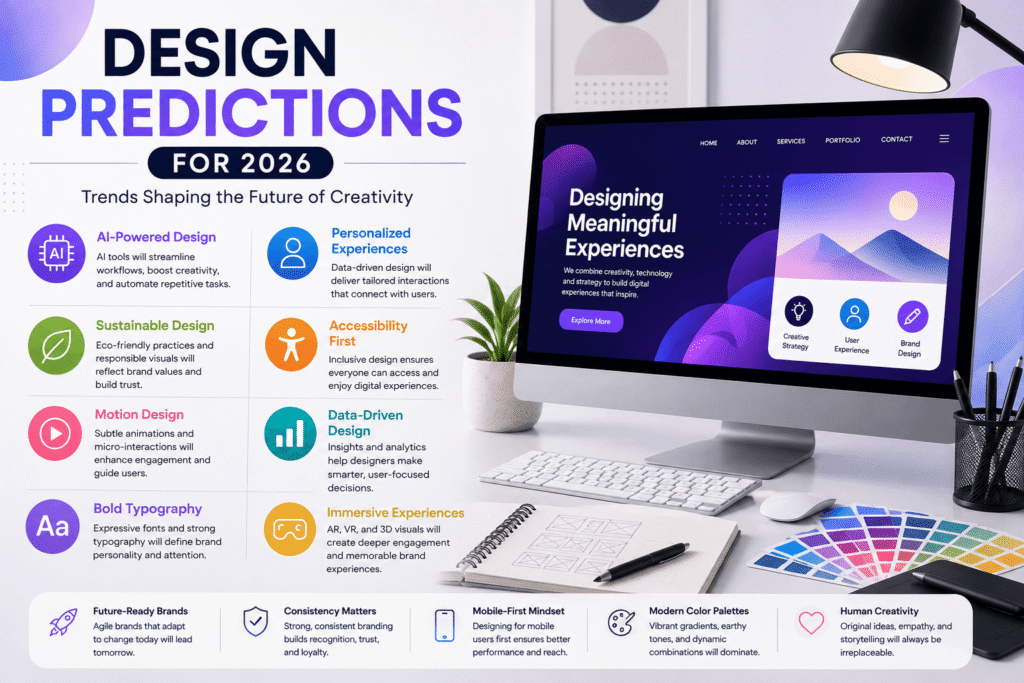
Benefits of Following Design Predictions
Keeping up with Design Predictions offers several advantages for businesses, designers, and marketing teams.
Better Customer Experience
Modern design creates intuitive interfaces that make it easier for users to find information, complete purchases, and interact with brands.
Higher Engagement
Interactive visuals, motion design, and personalized experiences encourage users to spend more time exploring your website or app.
Stronger Brand Recognition
A consistent and forward-thinking visual identity helps businesses become more memorable in competitive markets.
Improved SEO Performance
Fast-loading, accessible, and mobile-friendly designs support search engine optimization while improving user satisfaction.
Increased Conversion Rates
Strategic layouts, clear calls to action, and optimized user journeys often lead to more inquiries, sales, and sign-ups.
Long-Term Cost Savings
Designing with future trends in mind reduces the need for frequent, expensive redesigns.
Best Practices for Applying Design Predictions
Following trends should be strategic rather than reactive. Use these best practices to apply new ideas effectively.
Step 1: Understand Your Audience
Research your audience’s needs, preferences, and behaviors before implementing new design concepts.
Step 2: Align Design With Business Goals
Choose trends that support measurable objectives such as increasing conversions, improving engagement, or strengthening brand awareness.
Step 3: Build Flexible Design Systems
Create reusable components, style guides, and templates that can evolve as trends change.
Step 4: Prioritize Accessibility
Ensure your website and marketing materials are usable for all audiences, regardless of ability or device.
Step 5: Test Before Launching
Conduct usability testing, gather feedback, and review analytics before making major design changes.
Step 6: Combine AI With Human Creativity
Use AI tools to increase efficiency while relying on human insight for storytelling, strategy, and emotional connection.
Common Design Predictions Mistakes to Avoid
Avoid these common pitfalls when following design trends:
- Adopting every trend without evaluating its relevance
- Ignoring your target audience’s needs
- Overusing animations that slow down websites
- Neglecting accessibility standards
- Prioritizing style over usability
- Inconsistent branding across platforms
- Forgetting mobile optimization
- Making decisions without testing or data
The best designs balance creativity with functionality.
Design Predictions Checklist for Future-Ready Design
Use this checklist to evaluate your projects:
✔ Review emerging design trends annually.
✔ Keep branding consistent across all channels.
✔ Optimize every design for mobile devices.
✔ Follow accessibility best practices.
✔ Use AI responsibly to improve efficiency.
✔ Test user experiences before publishing.
✔ Monitor analytics and conversion metrics.
✔ Update color palettes and typography thoughtfully.
✔ Create scalable design systems.
✔ Focus on solving user problems rather than chasing trends.
Take the Next Step with Design Predictions
Staying ahead of design trends is about more than keeping your visuals current—it’s about creating experiences that connect with your audience and support your business goals. Whether you’re refreshing your brand, redesigning your website, or exploring AI-powered workflows, the right strategy can make a measurable difference.
If you’re ready to build a modern, high-performing brand, now is the perfect time to take action.
Ready to future-proof your brand?
- Review your current website and branding.
- Identify opportunities to improve user experience and accessibility.
- Explore new design tools that increase creativity and productivity.
- Develop a long-term design strategy that grows with your business.
Need expert guidance? Contact our team to discuss your next design project, request a consultation, or explore practical solutions that align with your goals.
Design Predictions FAQ
1. What are design predictions?
Design predictions are informed forecasts about the creative trends, technologies, and user preferences that are likely to shape the future of graphic design, branding, UX, and digital experiences. They help businesses and designers prepare for upcoming changes rather than reacting after they happen.
2. Why are design predictions important for businesses?
Understanding design predictions helps businesses create modern customer experiences, strengthen brand identity, improve website performance, and stay competitive. Following relevant trends strategically can also increase engagement, trust, and conversions.
3. Will AI replace graphic designers?
No. AI is expected to become a powerful creative assistant rather than a replacement for designers. It can automate repetitive tasks and speed up workflows, but human creativity, strategic thinking, storytelling, and problem-solving remain essential for successful design.
4. Which design trend will have the biggest impact in 2026?
While several trends will influence the industry, AI-assisted design, personalized user experiences, accessibility, sustainable branding, and data-driven decision-making are expected to have the greatest long-term impact.
5. How can I apply design predictions to my business?
Start by understanding your audience, reviewing your current branding, improving accessibility, using AI tools responsibly, testing new ideas with real users, and monitoring analytics. Adopt trends that support your business objectives rather than following every new style.
Conclusion: Preparing for Future Design Predictions
The future of design is being shaped by innovation, technology, and changing customer expectations. These Design Predictions show that successful businesses will focus on more than visual appeal—they will create experiences that are accessible, personalized, sustainable, and driven by real user needs.
Artificial intelligence will continue to improve efficiency, but originality, empathy, and strategic thinking will remain the qualities that set exceptional designers and brands apart. Organizations that invest in flexible design systems, strong branding, and continuous learning will be better prepared for future challenges and opportunities.
Instead of chasing every trend, evaluate each one carefully and adopt the ideas that align with your audience, industry, and long-term goals. By making thoughtful, user-focused decisions today, you’ll build a stronger brand that remains relevant well beyond 2026.